

Today's sponsor


Election Day is Tuesday, November 3, and many states are already offering early voting. Check your registration and find your polling place here. Make your plan to vote today.

When Secretary of Whatever Pete Hegseth announced the Pentagon would livestream the execution by firing squad of Nidal Malik Hasan, the former Army major who killed thirteen fellow soldiers in a mass shooting in 2009, my thoughts went to Haiti in the fall of 1964.
François “Papa Doc” Duvalier was in the seventh year of his brutal reign. Earlier that year, a group of thirteen young exiles calling themselves Jeune Haiti, or Young Haiti, had landed with weapons on a beach in southern Haiti, hoping to spark a revolution against his regime. Nearly all the rebels were killed in combat with both the Haitian Army, some of whom had been trained by the U.S. Marines, and Duvalier’s feared paramilitaries, known as the Tonton Makout. (Duvalier’s forces then massacred twenty-seven of their relatives in Haiti, including a two-year-old boy.) The desiccated corpse of one of the rebels, Yvon Laraque, was propped up for several days in the center of the capital, Port-au-Prince, on a lawn chair facing a sign that read “Welcome to Haiti.”
The two surviving guerrillas, Louis Drouin, a 31-year-old U.S. Army veteran, and Marcel Numa, a 21-year-old graduate of the SUNY Maritime College in the Bronx, were arrested and brought to the capital. On November 12, 1964, they were brought to the edge of the national cemetery to be shot. Papa Doc turned the occasion into a spectacle. Schools and government offices closed, and principals and bosses were instructed to bring their charges to witness the execution. Hundreds more were bused in from the countryside. Reporters and cameras were also on hand.
Subscribe to The Racket—free to start reading, paid to keep it going.
Edwidge Danticat recounts the scene:
The firing squad, seven helmeted men in khaki military uniforms, stretch out their hands on either side of their bodies. They touch each other’s shoulders to position and space themselves. The police and army move the crowd back, perhaps to keep them from being hit by ricocheted bullets. The members of the firing squad pick up their Springfield rifles, load their ammunition, and then place their weapons on their shoulders. Off screen someone probably shouts, “Fire!” and they do. Numa and Drouin’s heads slump sideways at the same time, showing that the shots have hit home … Blood spills out of Numa’s mouth. Drouin’s glasses fall to the ground, pieces of blood and brain matter clouding the cracked lenses.
The next day, Le Matin, the country’s national newspaper, described the stunned looking crowd as “feverish, communicating in a mutual patriotic exaltation to curse adventurism and brigandage.”
The silent film of the execution is on YouTube.1 The intended result was to terrify Haitians and exiles alike—to communicate, as Danticat wrote, that “it doesn’t matter whether one is exiled or executed, but it is much more important that caligula has the power to choose.”
It doesn’t take much insight or imagination to see that both Hegseth and Trump had something like this in mind. “We’ll make sure that people are able to watch it — that it’s public — because people need to understand that there are serious consequences for these types of things,” the former Fox News weekend host told something called Real America’s Voice News from the deck of the troubled USS Abraham Lincoln.
But — what “types of things” was he referring to? Yet another mass shooting happened at an Oregon elementary school yesterday. Initial reports put the death toll at four, including three children. The shooter also reportedly died, as they often do, though whether by their own hand or someone else’s remains unclear. In any case, few people embark on mass shootings expecting to survive the attempt; the threat of some future execution, televised or not, is unlikely to deter them. Indeed, the death penalty does not seem to be a major deterrent to crime at all.
Hasan is believed to have been motivated by a mess of factors, including the death of his mother, deepening religious conservatism, a conviction that the U.S. was at war with Islam, and anger over his own deployment orders to Afghanistan. Hasan also sent a barrage of emails to Anwar al-Awlaki, an Al-Qaeda propagandist and U.S. citizen who would later be killed on President Obama’s orders by a drone strike in Yemen. Katharine Poppe of the George Washington University Program on Extremism notes that while Awlaki’s sermons seem to have influenced Hasan, the cleric responded only twice, answered none of Hasan’s questions on religion, and gave him no directives.
If Hasan did think of himself as a would-be Al-Qaeda affiliate, when has the threat of death ever stopped a jihadist from staging an attack? Often death (and the hoped-for rewards of the afterlife) is the point: In prison, Hasan wrote that the purpose of his attack was, in part, to improve his rank in heaven, and “first and foremost to avoid Hell.” For an attacker who survives, the promise of execution by the infidel army—on a global livestream, no less—looks more like an inducement than a deterrent.
Free email without sacrificing your privacy

Gmail is free, but you pay with your data. Proton Mail is different.
We don’t scan your messages. We don’t sell your behavior. We don’t follow you across the internet.
Proton Mail gives you full-featured, private email without surveillance or creepy profiling. It’s email that respects your time, your attention, and your boundaries.
Email doesn’t have to cost your privacy.
So then what, precisely, was Trump talking about when, even as he changed his mind and canceled the show, he blathered on about how broadcasting Hasan’s execution would be a “strong deterrent for the World to witness how America deals with Terrorists and SCUM like Hasan?” The clue is in the choice of execution to broadcast. Trump wasn’t champing at the bit to broadcast the botched lethal injection of Christa Pike, nor any of the seven state death row inmates set to die before Hasan’s scheduled December 3 execution. Nor have I read about him pushing to broadcast any of the thirteen federal executions that took place during his first term. Nor have I heard any talk from Trump or his supporters about eventually broadcasting the executions of Dylann Roof or Robert Bowers, the white supremacists on death row for the massacres at Charleston’s Emanuel African Methodist Episcopal Church and Pittsburgh’s Tree of Life Synagogue, respectively.
Instead, Trump and Hegseth happened to pick a Muslim for the United States’ first proposed foray into public executions since Rainey Bethea was hanged in Owensboro, Kentucky, in 1936, at the height of Jim Crow. And not just any Muslim but the U.S. citizen son of Palestinian immigrants. And they announced their plans just weeks before a critical midterm election, in which Republicans, hoping to rescue their party from what would likely be a resounding defeat in a fair election, have chosen as their ennemi du cycle the imagined Muslim/Socialist threat, personified in part, in their fevered psychosexual imaginations, by a man who also happens to be named Hasan.
There are plenty of ways to explain Trump’s reversal: that he was convinced by the intervention of retired generals and an archbishop, that he had second thoughts about following the advice of a reportedly often drunk louse who has gotten him in trouble before, or that he, as a certain brand of liberal loves to say, simply TACO’d once again. But I think it was something else. In the days between Trump’s initial approval of the livestreamed execution and his change of course, several outlets reported that he learned Nidal Hasan was left paralyzed from the waist down after being shot during his attack, and so will have to be shot either in a wheelchair or propped upright.
In other words, it would have made for awkward TV. And if Trump knows anything—maybe the only thing—he knows how, and how not, to put on a show.
That’s the difference between Trump and authoritarians elsewhere, and of yore: not in his intent or bloodthirsty instincts. Duvalier, Saddam Hussein, Iran’s ayatollahs, and many other rulers who have used public executions to display political dominance and enforce social control would not have flinched at the optics. They had consolidated their regimes. Anyone who dared object audibly to Papa Doc’s public execution of Drouin and Numa was likely disappeared by the Tonton Makout. I have no doubt that Trump and at least some of his followers would like to get there. But they aren’t there yet. The fact that they thought they could get away with a livestreamed execution is alarming. That they still had to worry about how it would look means there is still ground to fight on.
And speaking of shootings, as of this writing, Trump still hasn’t said anything about the tragedy at Silver Rail Elementary School in Bend, Oregon.
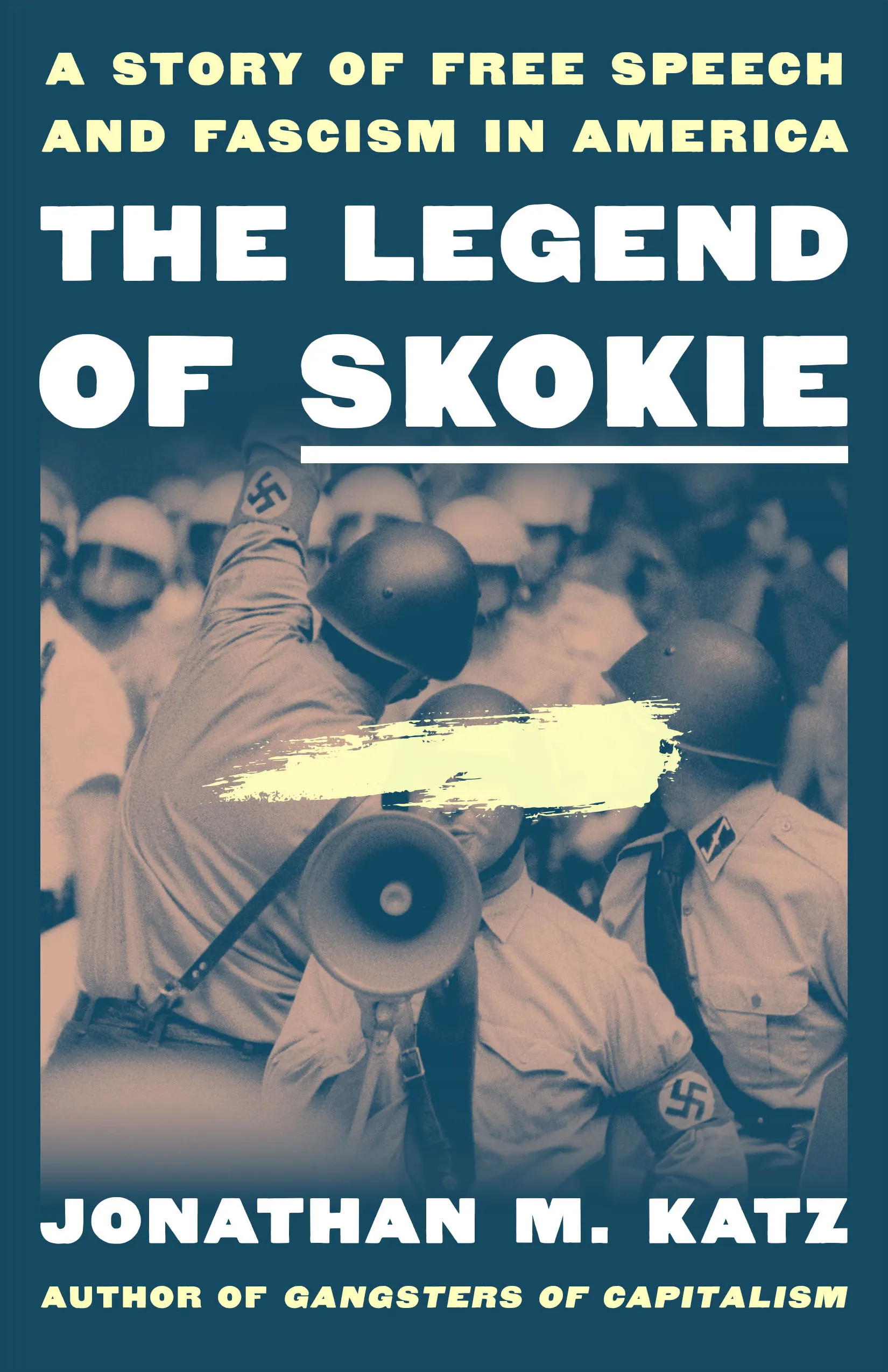
My next book, The Legend of Skokie: A Story of Free Speech and Fascism in America, is officially available for pre-order. Spencer Ackerman calls it “a magnificent, farsighted exploration.” Professor Nicole Hemmer calls it “a revelation.” Order your copy today:

1 Thanks to Dr. Claire Antone Payton for finding that. You can read her dissertation on how the Duvalier dictatorship shaped, and was shaped by, the building of Port-au-Prince here. Also thanks to her for marrying me.